

When You Say No to the Breath Test in Maryland
Refusing a breath test during a DUI stop in Maryland is not a small decision. The moment an officer in Harford County places you under arrest for suspected DUI and asks for a chemical test, you are stepping into the world of implied consent, automatic Motor Vehicle Administration penalties, and strict deadlines that do not wait for anyone.
If you say no to the breath test at the station or barrack, Maryland law treats that choice as a separate issue from whether you are guilty of DUI. Your license is on the line, your driving record is at risk, and prosecutors may still move forward with a criminal case based on other evidence. Our goal here is to explain how implied consent really works, what the 270-day suspension for a first-time refusal means for you, and why talking with a Harford County DUI lawyer quickly can help you understand your options.
How Maryland's Implied Consent Law Really Works
Implied consent is Maryland's way of saying that by driving on state roads, you have already agreed in advance to take a chemical test, usually a breath or blood test, if you are lawfully arrested for DUI or a related offense. You do not sign a form at the DMV making this promise, but the law treats your decision to drive as your consent.
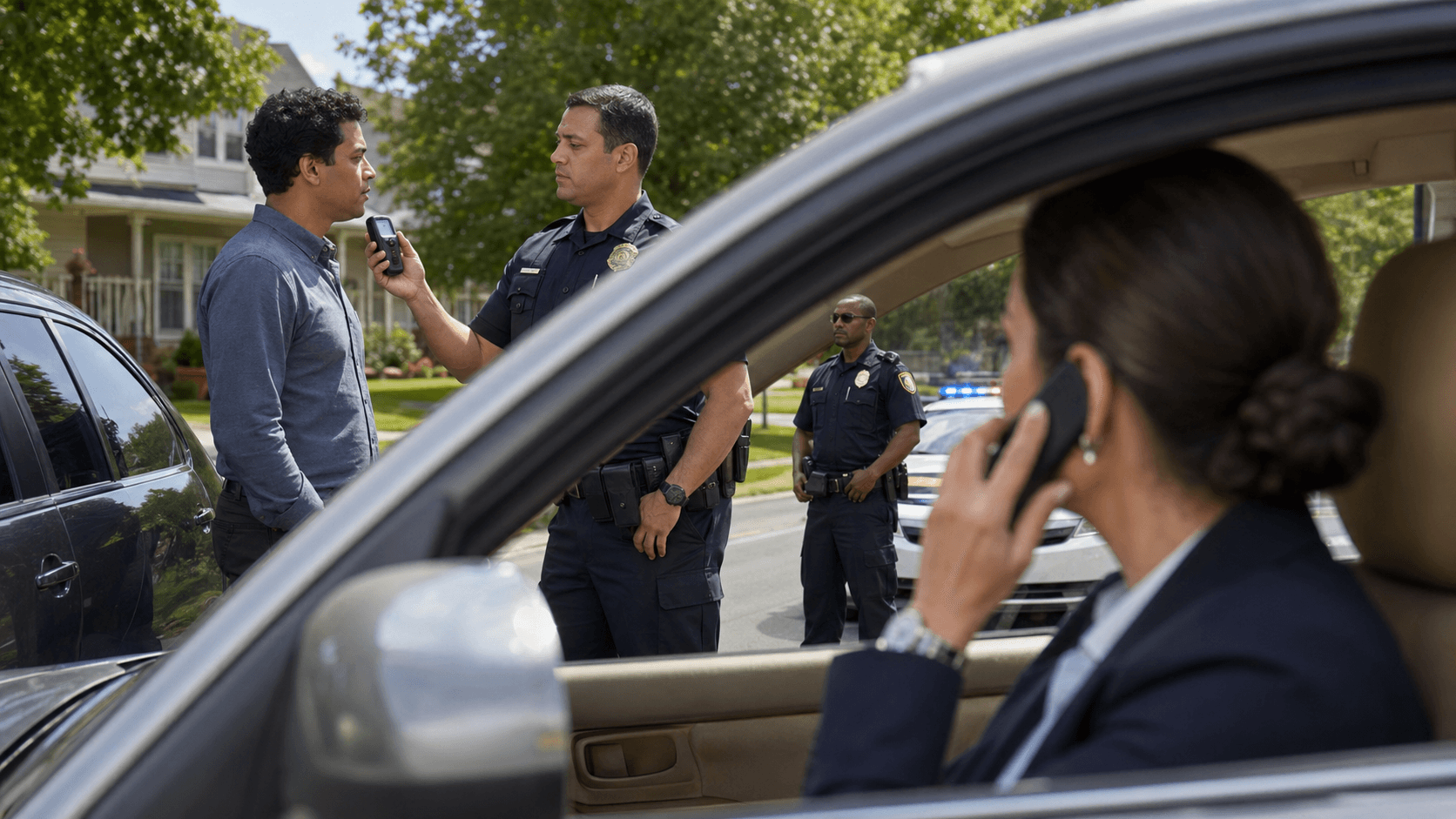
It is important to separate the roadside preliminary breath test from the official test at the station or barrack. The handheld roadside device, often offered before an arrest, is mainly a screening tool. The official test comes after an arrest, once the officer reads you the DR-15 form that explains your rights and the consequences of failing or refusing. Refusing that official test is what triggers the harsh implied consent penalties.
Implied consent only applies if certain steps happen correctly, including:
* A lawful arrest for DUI or a related alcohol offense
* The officer properly advising you of your rights and penalties using the DR-15 form
* An actual offer of a breath or blood test
* Your clear decision to submit or refuse
You still have a choice, and some drivers think refusal will help them in the criminal case, but Maryland law punishes refusal by itself. The State can suspend your license under implied consent rules whether or not a judge ever finds you guilty of DUI.
The Harsh MVA Fallout: 270 Days Without a License
For many drivers, the biggest shock after refusing a breath test is how hard the MVA comes down. If this is your first time refusing, the default penalty is a 270-day suspension of your Maryland driver's license. This is an administrative penalty, handled through the MVA, and it is separate from anything a criminal court might do later.
Compare that to failing the breath test. If you take the test and blow a high result, the typical suspension is usually 180 days. That means refusing can actually be worse for your license than failing, even if you think refusing might help the criminal charges. We regularly see people who are stunned to learn they face a longer loss of driving privileges simply because they said no.
The process usually looks like this:
* The officer confiscates your physical license at the station
* You receive a temporary paper license that is valid for a short period
* You are given the DR-15 and related paperwork that explain your rights
* You have a limited time to request an MVA hearing to challenge or modify the suspension
Some drivers may be eligible for limited relief, such as participating in the ignition interlock program instead of sitting out a full suspension. Deciding whether to request a hearing, go straight into interlock, or try to challenge the stop or arrest is not one-size-fits-all. A Harford County DUI lawyer can help you weigh how each path affects your license, your work, and your long-term record.
Criminal Case Impact: Does Refusal Help or Hurt You?
Many people refuse the breath test because they hope it will keep the State from proving DUI. There is some logic to that, since without a test number the prosecutor cannot point to a specific alcohol concentration level. However, refusal does not automatically fix the criminal side of the case.
Prosecutors are allowed to use your refusal as evidence. They can argue that you said no because you believed you were impaired and did not want the number on record. At the same time, the lack of a test result can force the State to rely more heavily on:
* The officer's observations of driving behavior
* Field sobriety test performance
* Audio and video from the stop and station
* Your statements and any admissions of drinking
You can still be convicted of DUI in Maryland without a chemical test result. The judge or jury can find impairment based on the overall evidence. This is why it is so important for a Harford County DUI lawyer to review the stop, the arrest, and the way the DR-15 advisements were handled. If the officer did not follow the rules, your refusal or other evidence could be challenged, which may weaken the State's case.
Your Options After Refusing: Hearings, Interlock, and Defense
If you have refused the breath test, your next steps matter a lot. The paperwork you left the station with is not just a stack of forms. It is your roadmap for protecting your license as much as possible.
Right after the arrest, you should:
* Carefully read the DR-15 advice form to understand the suspension and interlock options
* Keep the temporary license safe and know its expiration date
* Mark the deadline to request an MVA hearing if you want to challenge the suspension
* Gather everything you were given so you can review it with a lawyer
At an MVA hearing, the administrative law judge does not decide guilt or innocence of DUI. Instead, the issues usually focus on whether the officer had reasonable grounds for the stop and arrest, properly advised you under the DR-15, and whether you actually refused the test. The judge can uphold the 270-day suspension, modify it, or in some situations set it aside.
For many drivers, ignition interlock is an alternative to a straight suspension. Interlock means a device in your vehicle that requires a breath sample before starting the car and sometimes while driving. It can be disruptive, but it often allows people to keep driving for work, school, and family responsibilities instead of losing all driving privileges.
When you meet with a Harford County DUI lawyer, bringing your citation, DR-15 form, temporary license, and any other paperwork helps them tie together your MVA strategy with the defense of the criminal charges. The same facts that affect your hearing, such as whether the stop was lawful or the advisements were complete, often matter just as much in court.
Protecting Your Future After a Refusal in Harford County
Refusing a breath test in Maryland is not a quick fix. A first-time refusal typically triggers a 270-day suspension under implied consent laws, can still be used against you in court, and does not prevent a DUI conviction if the State has other strong evidence. The MVA process runs on strict timelines, and ignoring the deadlines can take away options like hearings or ignition interlock.
If your arrest happened in Bel Air, Havre de Grace, or anywhere else in Harford County, it is important to treat the refusal as a legal problem that affects both your license and your criminal record. Understanding implied consent, taking the paperwork seriously, and getting guidance from a Harford County DUI lawyer early can help you make informed choices about hearings, interlock, and a defense strategy built around your specific situation.
Protect Your Future With Experienced Local DUI Defense
If you are facing DUI charges in Harford County, our team at Harford County DUI is ready to help you understand your options and build a strong defense. Speak with an experienced Harford County DUI lawyer today so you are not navigating this alone. We will review your situation, explain what to expect, and outline practical next steps tailored to your case. To schedule a confidential consultation, please contact us.